
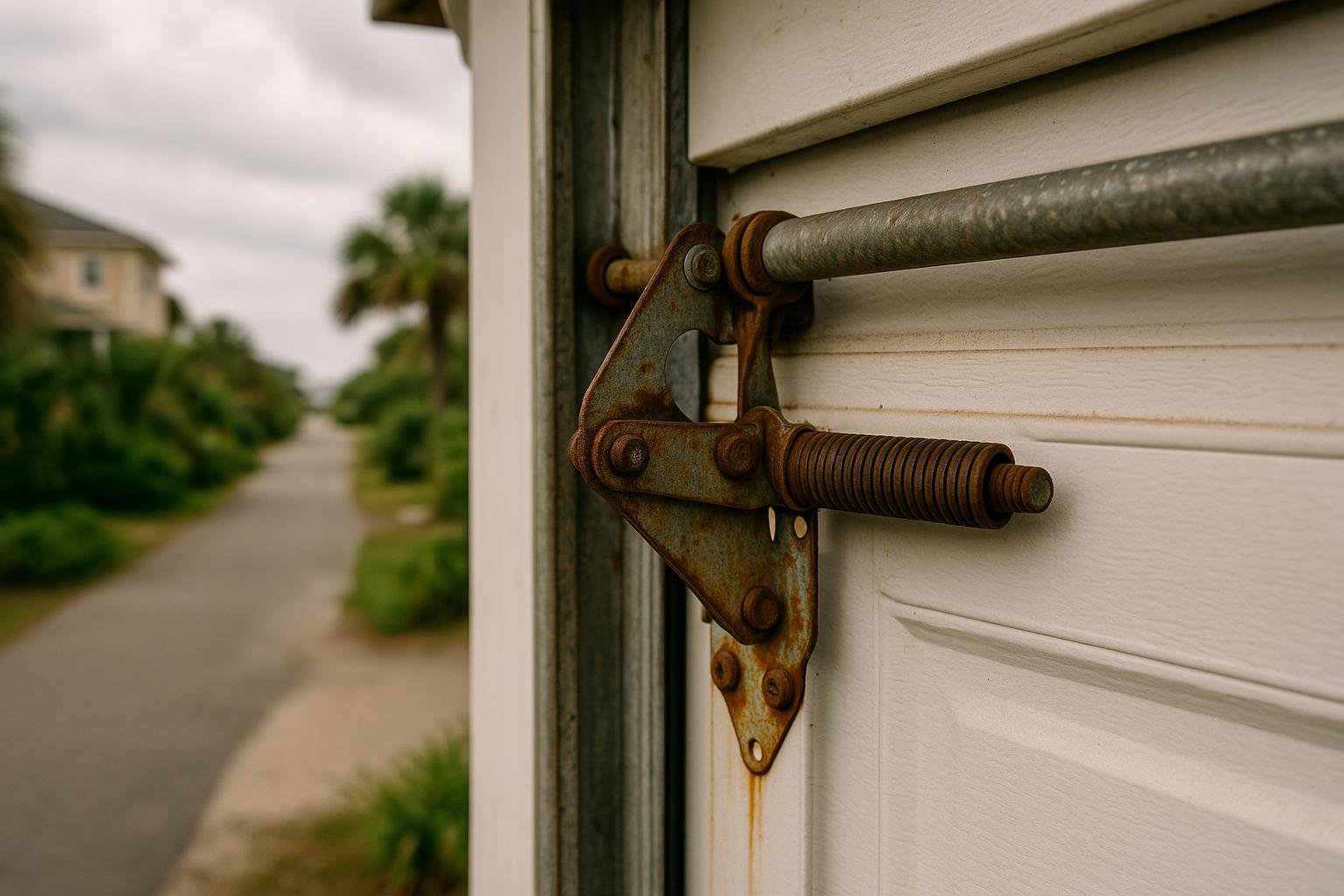
Your Garage Door Has a Tough Job on the Coast
Wilmington is a beautiful place to live, but the coastal climate isn't always kind to your home's exterior — and your garage door is no exception. Between the humidity that hangs in the air for months on end and the salt carried inland from Carolina Beach and Wrightsville Beach, garage doors in our area face conditions that can shorten their lifespan and lead to unexpected breakdowns.
If you've noticed rust forming on your garage door hardware, paint peeling off your door panels, or parts that seem to be wearing out faster than they should, the local climate is likely playing a role. Here's what you need to know about how coastal weather affects your garage door and what you can do to stay ahead of the damage.
How Humidity Damages Garage Doors and Their Components
Wilmington averages relative humidity levels above 70% for much of the year, and during summer months it often climbs even higher. That constant moisture in the air creates problems for nearly every part of your garage door system.
Metal Hardware and Springs
The springs, hinges, rollers, tracks, and brackets that make your garage door function are mostly made of steel. Prolonged exposure to humid air accelerates oxidation, which means rust. Rusty springs lose their tensile strength and are more likely to snap without warning. Corroded rollers create friction that puts extra strain on your opener. Even the tracks can develop rough spots that cause the door to bind or go off track.
Wooden Garage Doors
If you have a wooden garage door — which many older homes in Wilmington do — humidity is an even bigger concern. Wood absorbs moisture from the air, causing it to swell. A swollen garage door may stick, drag along the floor, or become difficult to seal properly. Over time, repeated swelling and drying cycles lead to warping, cracking, and rot. Once rot sets in, the structural integrity of the door is compromised and replacement becomes the only real option.
Garage Door Openers
The electronic components inside your garage door opener aren't immune to moisture either. Humidity can cause condensation on circuit boards, corrode electrical contacts, and degrade wiring connections. If your opener has started behaving erratically — working sometimes but not others, or making unusual sounds — moisture damage could be a contributing factor.
The Salt Air Factor
Homeowners in coastal communities like Carolina Beach, Wrightsville Beach, and Porters Neck deal with an additional threat: salt air. Salt is carried by wind from the ocean and settles on every exposed surface, including your garage door. Salt dramatically accelerates corrosion on metal components. Even galvanized steel, which is treated to resist rust, will eventually break down under constant salt exposure.
This is why we often see garage door hardware in coastal neighborhoods deteriorate two to three times faster than the same components on homes further inland, like in Leland or Hampstead. Springs that might last eight to ten years in a drier climate may only last four to six years near the beach.
Signs That Coastal Weather Is Taking a Toll on Your Garage Door
Keep an eye out for these warning signs that humidity and salt air are causing damage:
- Visible rust on springs, hinges, tracks, or the door panels themselves
- Squeaking, grinding, or scraping sounds when the door operates, which can indicate corroded rollers or rough spots on the tracks
- A door that sticks or feels heavy when you try to lift it manually
- Peeling, bubbling, or flaking paint on the door's exterior surface
- Swelling or warping of wooden door panels
- Intermittent opener problems that don't seem to have a clear mechanical cause
- Staining or discoloration around bolts, brackets, and bottom fixtures
If you're noticing several of these issues at once, it's worth having a professional take a closer look before a minor problem turns into an emergency repair.
How to Protect Your Garage Door From Coastal Conditions
The good news is that with a little proactive maintenance, you can significantly extend the life of your garage door — even in Wilmington's demanding climate.
Schedule Regular Maintenance
A professional tune-up once or twice a year makes a real difference. During a maintenance visit, a technician will lubricate all moving parts with a rust-inhibiting lubricant, inspect springs and cables for early signs of corrosion, tighten hardware, and check the balance and alignment of the door. Think of it like an oil change for your garage door — it's a small investment that prevents expensive problems down the road.
Rinse Your Door Regularly
This one sounds simple because it is. Rinsing your garage door with fresh water every few weeks helps wash away salt deposits before they can do damage. Pay attention to the hardware and the bottom of the door where salt and grime tend to accumulate. A garden hose is all you need.
Keep Metal Parts Lubricated
Between professional maintenance visits, apply a silicone-based or lithium-based lubricant to springs, hinges, rollers, and tracks every few months. This creates a protective barrier against moisture and reduces friction. Avoid using WD-40 as a long-term lubricant — it's a solvent that can actually strip away protective coatings over time.
Repaint or Seal Wooden Doors
If you have a wooden garage door, make sure the paint or sealant is in good condition. Any cracks, chips, or bare spots allow moisture to penetrate the wood. Repainting or resealing every two to three years is a smart preventive measure for homeowners in humid coastal areas.
Consider Upgrading to Corrosion-Resistant Materials
If your current garage door is reaching the end of its life, consider replacing it with a door designed for coastal environments. Aluminum, fiberglass, and vinyl garage doors all resist corrosion far better than untreated steel or wood. Many modern steel doors also come with enhanced coatings and finishes specifically engineered for high-humidity, salt-air environments. When you're ready for a new installation, it's worth discussing material options with your installer to find the best fit for your location and budget.
Don't Wait for a Breakdown
Coastal weather damage is gradual. It doesn't announce itself with a dramatic failure — at least not at first. But left unchecked, rust weakens springs until they snap, corroded tracks send doors off their rails, and moisture-damaged openers quit at the worst possible moment.
The most cost-effective approach is to stay ahead of the damage with regular inspections and maintenance. Catching a corroded spring early means a simple replacement. Ignoring it means a broken spring, a door that won't open, and an emergency repair call.
At Wilmington Garage Door Repair, we understand the unique challenges that come with maintaining a garage door in a coastal environment. Whether you need a routine tune-up, a spring replacement, or you're thinking about upgrading to a more weather-resistant door, we're here to help. We serve homeowners throughout Wilmington, Leland, Hampstead, Carolina Beach, Wrightsville Beach, and Porters Neck — and we know what it takes to keep garage doors working reliably in our local climate.
If it's been a while since your garage door had a checkup, give us a call. A little prevention now can save you a lot of hassle and expense later.