
Your Garage Door Springs Won't Last Forever — Here's How to Stay Ahead
If you've ever had a garage door spring break, you know the moment well. There's a loud bang that sounds like a gunshot, and suddenly your garage door won't budge. It's startling, inconvenient, and sometimes even dangerous. The good news is that spring failure rarely happens without warning. If you know what to look for, you can catch the problem early and schedule a replacement on your terms — not in the middle of a Wilmington rainstorm when you're already running late.
At Wilmington Garage Door Repair, we replace worn-out and broken springs every week. Most of the time, homeowners tell us they noticed something was off for weeks or even months before the spring finally gave out. Here are the signs we tell our customers to watch for.
Understanding What Your Garage Door Springs Actually Do
Before we get into the warning signs, it helps to understand why springs matter so much. Your garage door is one of the heaviest moving parts of your home — most residential doors weigh between 130 and 350 pounds. The springs are what counterbalance all that weight, making it possible for your opener to lift the door with a small motor instead of a crane.
There are two main types of garage door springs:
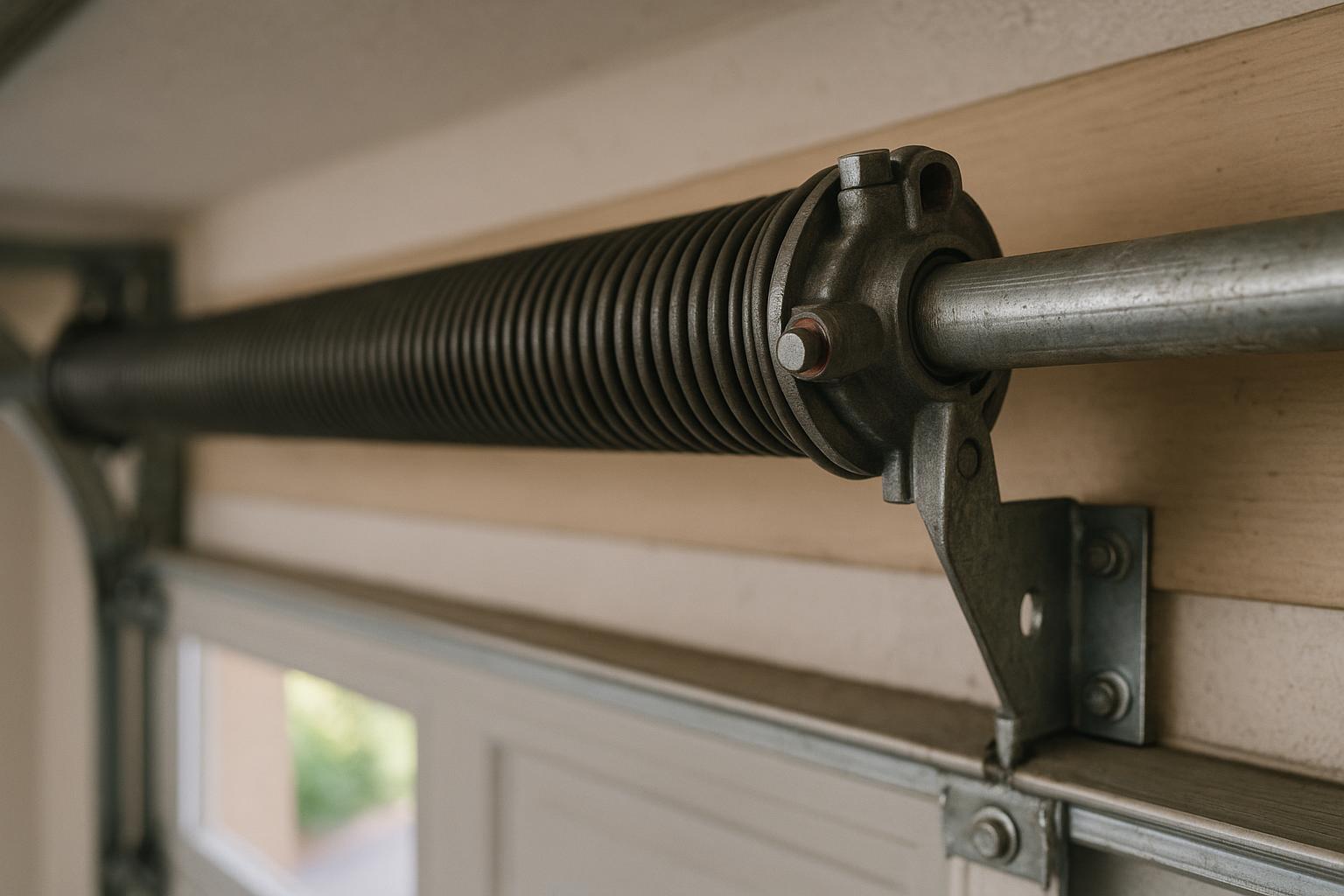
- Torsion springs — mounted on a metal shaft above the door opening. These are the most common type on modern garage doors.
- Extension springs — mounted along the horizontal tracks on either side of the door. These are more common on older systems.
Both types are under extreme tension, and both wear out over time. Most springs are rated for about 10,000 cycles — one cycle being a single open-and-close. If you use your garage door four times a day, that's roughly seven years of life. Homes in areas like Porters Neck, Hampstead, and Leland where the garage is the primary entry point may see even more daily use.
7 Warning Signs Your Garage Door Springs Are Failing
1. The Door Feels Heavier Than Usual
Try this simple test: disconnect your garage door opener by pulling the emergency release cord, then manually lift the door about halfway. A properly balanced door should stay in place on its own. If it feels heavy, slides back down, or is difficult to lift, your springs are losing tension and nearing the end of their life.
2. The Door Opens Unevenly or Crooked
If one side of your door rises faster than the other, it usually means one spring is weaker than its counterpart. This is especially common on doors with two torsion springs or extension springs on each side. An uneven door puts extra stress on the tracks, cables, and opener, which can lead to more expensive problems down the road.
3. You Hear Squealing, Grinding, or Popping Sounds
Some noise during operation is normal, but new or worsening sounds are a red flag. Squealing can indicate that the spring coils are binding. Popping or snapping sounds may mean the spring is starting to separate. If you hear anything unusual, it's worth having a professional take a look before the spring fails completely.
4. Visible Gaps in the Spring Coils
Take a look at your torsion spring above the door. A healthy spring has tightly wound coils with no visible gaps. If you see a gap — even a small one — it means the spring has already partially broken or stretched beyond its limit. This is one of the clearest visual indicators, and it means replacement should happen soon.
5. The Door Slams Shut Quickly
When springs lose their counterbalancing force, gravity takes over. If your garage door drops faster than it used to or slams shut when you release it manually, the springs aren't doing their job anymore. This is a safety concern, especially for families with children or pets in Wilmington neighborhoods where kids play in driveways and garages.
6. Your Opener Is Struggling
A garage door opener is designed to work with properly functioning springs, not to do all the heavy lifting on its own. If your opener strains, hesitates, or stops mid-cycle, worn springs may be forcing it to work harder than it should. Continuing to run the opener under these conditions can burn out the motor, turning a spring replacement into a much more costly repair.
7. The Springs Are Visibly Rusty or Corroded
Wilmington's coastal humidity is tough on metal components. Salt air from Carolina Beach and Wrightsville Beach accelerates rust, and rusty springs are weaker springs. Corrosion increases friction between the coils, which causes them to wear out faster. If your springs look orange or flaky, their remaining lifespan is significantly shorter than you might expect.
Can You Replace Garage Door Springs Yourself?
We understand the appeal of a DIY fix, but garage door springs are one repair we strongly recommend leaving to professionals. Here's why:
- Extreme tension: Torsion springs are wound under tremendous force. A spring that releases unexpectedly can cause serious injury or death.
- Specialized tools required: Proper replacement requires winding bars, clamps, and experience that most homeowners don't have.
- Matching matters: Installing the wrong spring size or type can damage your door, void your opener's warranty, or create a safety hazard.
Every year, emergency rooms across the country treat thousands of injuries related to DIY garage door spring repairs. It's simply not worth the risk when professional replacement is affordable and can usually be completed in under an hour.
How Long Does a Spring Replacement Take?
For most homes in the Wilmington area, a professional spring replacement takes between 30 and 60 minutes. We carry the most common spring sizes on our trucks, so in many cases we can handle the repair in a single visit. After installation, we balance the door, lubricate the new springs, and test the entire system to make sure everything operates safely.
Extending the Life of Your New Springs
Once you've had your springs replaced, a little maintenance goes a long way toward getting the most out of them:
- Lubricate the springs with a silicone-based spray every three to four months. This is especially important in Wilmington's humid, salt-air climate.
- Schedule an annual tune-up to check spring tension, cable condition, and overall door balance.
- Consider high-cycle springs if you use your garage door frequently. These are rated for 25,000 to 50,000 cycles and can last two to five times longer than standard springs.
Don't Wait for the Bang
If you've noticed any of the warning signs above, the smartest move is to address the problem now — before a broken spring leaves your car trapped in the garage or your home's security compromised. Wilmington Garage Door Repair provides fast, honest spring replacement service across Wilmington, Leland, Hampstead, Carolina Beach, Wrightsville Beach, and Porters Neck. We'll inspect your springs, give you a straightforward quote, and get your door working safely again.
Give us a call or reach out online to schedule a spring inspection. It's a small step that can save you a big headache.