
That Frustrating Moment When Your Garage Door Won't Stay Closed
You press the button on your remote, watch your garage door start its descent, and then — right before it reaches the floor — it reverses and goes back up. You try again. Same thing. Maybe you try holding the wall button down, and it finally closes, but the moment you let go, it creeps back up.
This is one of the most common garage door complaints we hear from homeowners in Wilmington, and it's more than just an annoyance. A garage door that won't close properly leaves your home vulnerable to weather, pests, and security risks. The good news is that the cause is usually identifiable and fixable. Let's walk through the most likely reasons your garage door keeps reversing and what you can do about each one.
1. Misaligned or Dirty Safety Sensors
This is the number one cause of a garage door that reverses before closing, and it's often the easiest to fix yourself.
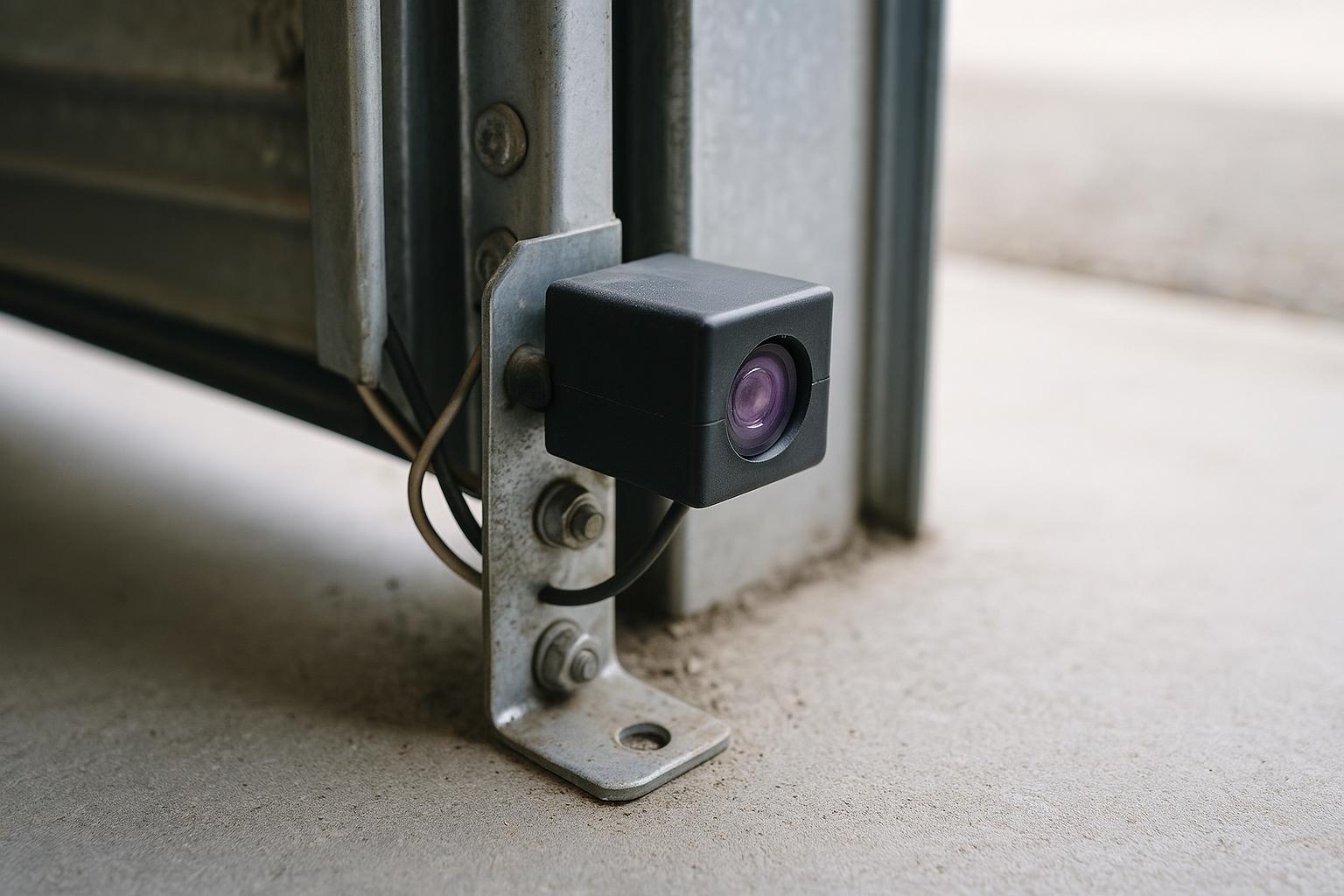
Every garage door opener manufactured after 1993 is required to have photo-eye safety sensors mounted near the bottom of the door tracks, about six inches off the ground. These sensors send an invisible beam across the opening. If anything breaks that beam — a child, a pet, a bike tire — the door reverses to prevent injury or damage.
The problem is that these sensors can become misaligned from a bump, vibration, or even settling of your garage floor over time. When they're not perfectly aimed at each other, the opener thinks something is blocking the door and reverses it.
What to Check
- Look at the LED lights on each sensor. Typically, one glows green (sending) and one glows amber or green (receiving). If either light is blinking or off, there's a problem.
- Clean the lenses with a soft cloth. Dust, cobwebs, and even pollen — something we deal with plenty of here in Wilmington — can block the beam.
- Check the alignment. Gently adjust the sensors so they point directly at each other. You'll know they're aligned when both lights glow steadily.
- Inspect the wires. Sensor wires can get snagged, chewed by rodents, or corroded, especially in our humid coastal climate.
2. The Close-Force Setting Needs Adjustment
Your garage door opener has a force setting that determines how much resistance it takes before the motor stops and reverses. If the close-force is set too low, the opener may interpret normal resistance — like the weight of the door itself or slight friction in the tracks — as an obstruction and reverse.
Most openers have a small adjustment screw or dial labeled "close force" or "down force." Turning it slightly (usually a quarter turn at a time) increases the force. However, be cautious — setting it too high can create a safety hazard. If you're unsure, this is a good time to call a professional for a quick adjustment.
3. Worn or Broken Garage Door Springs
Your garage door springs do the heavy lifting — literally. They counterbalance the weight of the door so the opener motor doesn't have to work as hard. When springs wear out or break, the door becomes significantly heavier for the opener to move.
If your springs are weakening, the opener may struggle to control the door's descent. The motor senses excessive force and reverses as a safety precaution. You might also notice the door feels heavier if you try to lift it manually, or it slams down faster than usual.
Important: Garage door springs are under extreme tension and can cause serious injury if handled improperly. Spring replacement is not a DIY job. If you suspect your springs are the issue, contact a qualified technician to inspect and replace them safely.
4. Damaged or Obstructed Tracks
The metal tracks that guide your garage door need to be clean, properly aligned, and free of dents or debris. Even a small bend in a track can cause enough resistance to trigger the opener's auto-reverse feature.
Signs of Track Problems
- Visible dents, bends, or gaps in the track
- The door wobbles or makes scraping sounds during operation
- Debris, leaves, or small objects lodged in the track
- The door appears crooked as it moves
You can clean out minor debris yourself, but bent or misaligned tracks typically require professional repair to avoid making the problem worse.
5. The Travel Limit Is Set Incorrectly
Your opener has a travel limit setting that tells it exactly how far the door should move when opening and closing. If the down-travel limit is set too far, the opener pushes the door past the floor, meets resistance, and reverses.
This commonly happens after a new opener installation or when someone accidentally bumps the adjustment controls. Like the force setting, the travel limit is adjusted with a small screw or dial on the opener unit. Small adjustments make a big difference — turn it just slightly and test the door after each adjustment.
6. Worn Rollers or Hinges Creating Excess Friction
Over time, the rollers that ride inside your tracks and the hinges connecting your door panels wear down. Worn rollers create friction, and that friction can be enough to trigger the auto-reverse mechanism. You might hear squeaking, grinding, or popping sounds as the door operates.
Regular lubrication with a silicone-based garage door lubricant can extend the life of these components. But if the rollers are visibly cracked, chipped, or no longer rolling smoothly, they should be replaced.
7. Electrical Issues or Opener Malfunction
Sometimes the problem isn't mechanical at all. A failing logic board in the opener, frayed wiring, or even power surges — which aren't uncommon during Wilmington's summer storm season — can cause erratic behavior, including random reversing.
If you've checked the sensors, tracks, springs, and settings and the door still won't cooperate, the opener's internal electronics may need diagnosis or replacement.
When to Call a Professional
Some of these fixes are straightforward enough for a handy homeowner to tackle — cleaning sensors, lubricating rollers, or making small setting adjustments. But several situations call for professional help:
- Broken or weakening springs
- Bent or misaligned tracks
- Electrical or logic board issues
- Any repair that involves the door's tension system
- When you've tried the basics and the problem persists
At Wilmington Garage Door Repair, we see reversing garage doors on a weekly basis across Wilmington, Leland, Wrightsville Beach, and the surrounding areas. In most cases, we can diagnose and fix the issue in a single visit. We'll also check the rest of your system while we're there to catch small problems before they become expensive ones.
Don't Ignore a Reversing Garage Door
A garage door that won't close isn't just inconvenient — it's a security risk and an invitation for moisture, insects, and critters to enter your garage. In a coastal area like ours, where humidity and salt air already put extra stress on garage door components, staying on top of repairs is especially important.
If your garage door keeps reversing and you can't pinpoint the cause, give us a call. We'll get it diagnosed quickly, explain your options honestly, and get your door closing the way it should — every single time.